Department of Chemistry and Bioscience
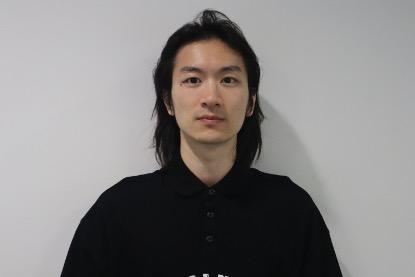
PhD Defence by Tianzhao Xu
Fredrik Bajers Vej 7H, 9220, Aalborg East, Room 3.122-8 FRB7H
20.03.2026 Kl. 13:00 - 16:00

English

On location
Fredrik Bajers Vej 7H, 9220, Aalborg East, Room 3.122-8 FRB7H
20.03.2026 Kl. 13:00 - 16:00
English
On location
Department of Chemistry and Bioscience
PhD Defence by Tianzhao Xu
Fredrik Bajers Vej 7H, 9220, Aalborg East, Room 3.122-8 FRB7H
20.03.2026 Kl. 13:00 - 16:00
English
On location
Fredrik Bajers Vej 7H, 9220, Aalborg East, Room 3.122-8 FRB7H
20.03.2026 Kl. 13:00 - 16:00
English
On location
Abstract
Glass, as a category of material defined by its physical state, is fundamentally characterized by its structural disorder. In recent years, the emergence of hybrid glasses has established a new platform for advancing glass science, offering deeper insights into the nature of disordered materials. Metal organic-inorganic complex (MOIC) glasses are a subclass of hybrid glasses. They are coordination compounds containing both organic and inorganic ligands that are interconnected through supramolecular interactions. Their simple synthesis process, high yield, and ability to form large, processable bulk products underscore their considerable potential for advancing hybrid glasses toward industrial-scale production and real-world applications. This doctoral thesis, therefore, aims to elucidate the formation mechanisms of MOIC glasses, establish general strategies for their design and fabrication, and expand the landscape of hybrid glasses through MOIC-based systems.
First, a general strategy was established for identifying MOIC crystals that can be vitrified by melt quenching. This approach introduces hydrogen-bond-forming tetrahedral units by partially substituting the organic ligands in zeolitic imidazolate frameworks (ZIFs, A type of porous coordination compounds) with inorganic anions. The structural evolution during and after melt-quenching was tracked, revealing the breakage of hydrogen bonds and the formation of a disordered hydrogen-bond network in the resulting glass. These findings deepen the understanding of the structure of MOIC glasses and elucidate the vitrification mechanism of MOIC crystals.
Subsequently, for MOIC glasses obtained directly through solvent evaporation, a method combining stepwise drying and dried gel-quenching was developed to enhance their stability. Structural analyses confirm that the construction of a hydrogen-bond network is essential for glass formation. This work not only establishes a strategy for producing large, stable, and functional MOIC glasses but also elucidates how hydrogen-bond strength governs their formation pathway.
Finally, MOICs were employed as network modifiers to introduce hydrogen-bonded networks into the coordination networks of ZIFs. By tuning the reaction conditions and precursor composition, it is possible to produce bulk glass-ceramics with controllable crystallinity, as well as hybrid glasses with tailorable properties. This strategy enables the vitrification of previously non-meltable ZIFs, thereby opening promising opportunities to expand the compositional and functional landscape of hybrid glasses through network hybridization.
Attendees
- Associate Professor Cejna Anna Quist-Jensen Aalborg University, Denmark (chair)
- Associate Professor Nina Lock, Aarhus University, Denmark
- Associate Professor Guillermo Mínguez Espallargas, University of Valencia, Spain
- Professor Yuanzheng Yue, Aalborg University, Denmark