Artikel
January Newsletter 2026
..Read the latest news from the desk of the Head of Department here
Artikel
..Read the latest news from the desk of the Head of Department here
Highlights from this months newsletter
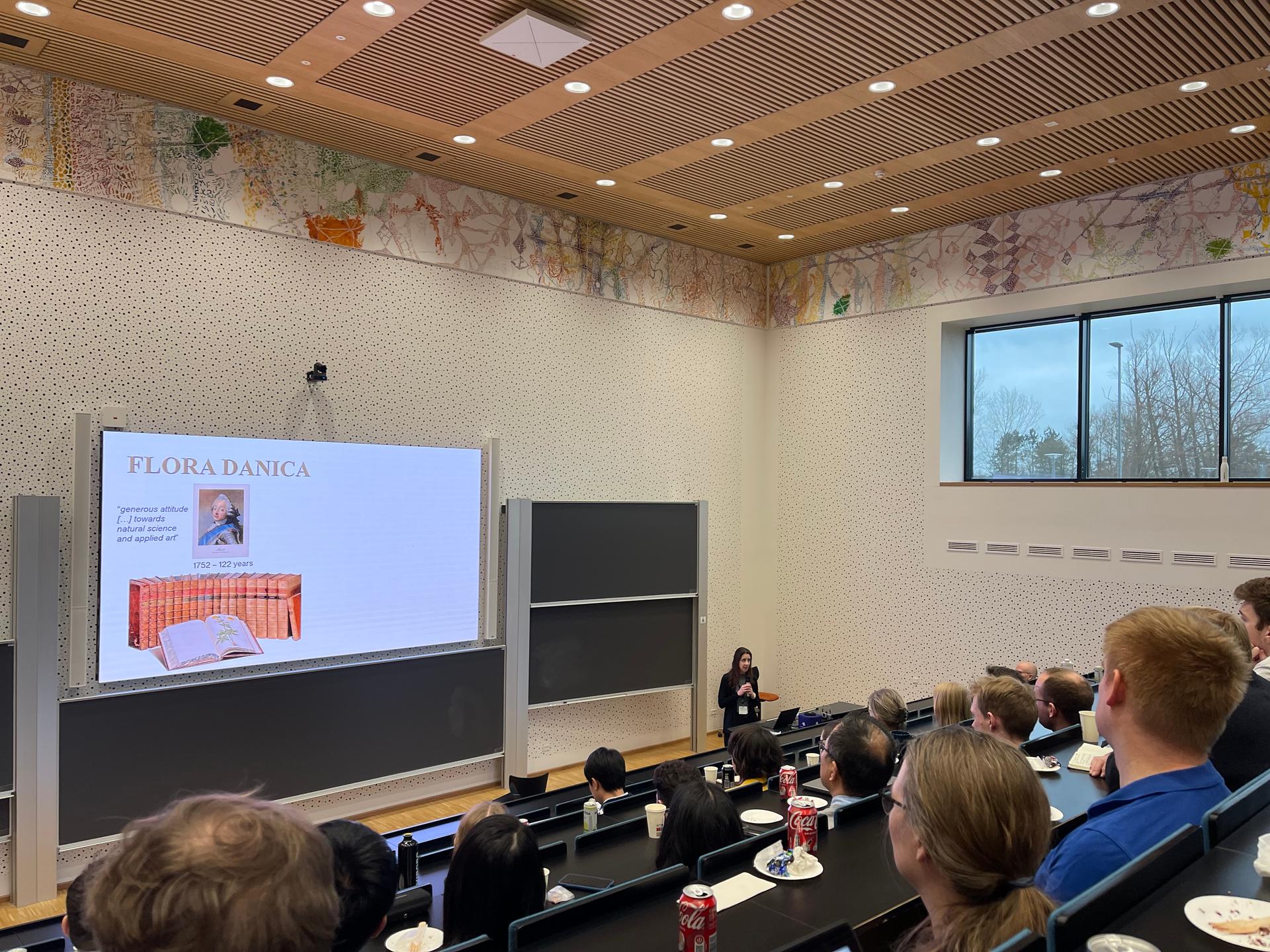
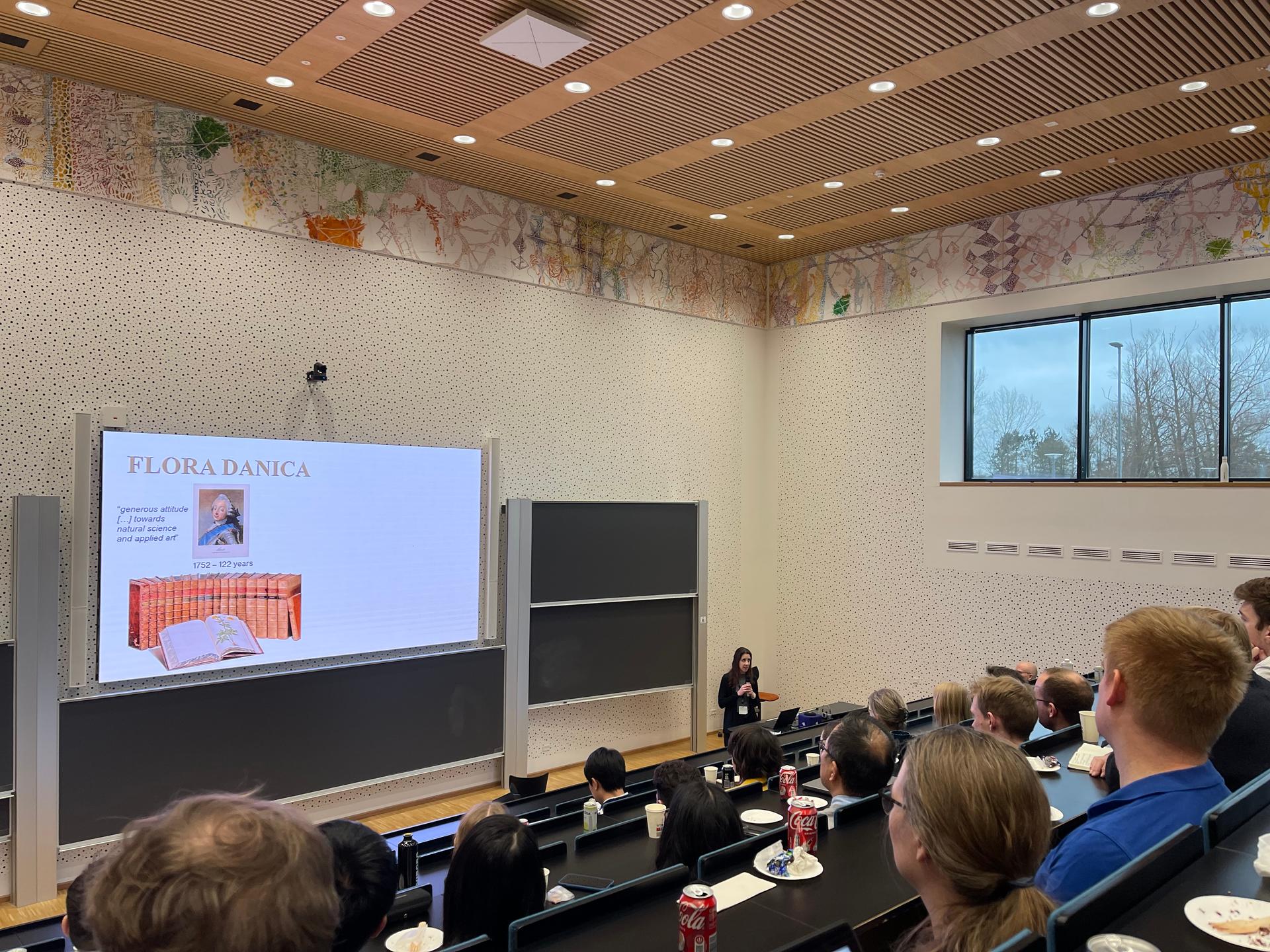
Thank you to everyone who joined our department meeting on 23 January 2026. It was a great occasion with important updates and moments of celebration. We were pleased to hear a short talk by Tenure‑Track Assistant Professor Caitlin Singleton, who presented an overview of her contributions to the Microflora Danica project. A special moment of the meeting was celebrating and saying goodbye to Associate Professor Casper Steinmann, who is embarking on new career adventures at SDU. We wish him all the best.
From my perspective, the main takeaways from the New Year’s gathering were, first and foremost, that BIO employees are truly outstanding. Overall, the department is performing very well across almost all parameters. This is exemplified by a new record in externally funded projects initiated in 2025, amounting to 166 million DKK. Similarly, our turnover from externally funded projects reached a new high of 109 million DKK, which is a strong economic testament to our growing research and innovation activities.
Counterintuitively, our increasing success in attracting external funding also puts pressure on the department’s overall economy. This is partly because externally funded projects are, on average, underfunded. The typical funding schemes for externally funded projects, combined with AAU’s internal budget model, generate a systematic deficit. This deficit is currently covered by a systematic surplus generated by our teaching activities. In practice, this means that surplus from teaching is used to support externally funded research (for example, a surplus of 10 million DKK from teaching supports a turnover (salaries and operating expenses) of approximately 80 million DKK in externally funded projects).
This model is only viable as long as the surplus matches the deficit.
Unfortunately, this balance is not expected to hold going forward for two main reasons: our turnover in externally funded projects continues to increase, and our income from teaching activities is declining.
Current student intake projections indicate that we may experience a 39% decline in STÅ (student full‑time equivalents, equivalent to exams passed) by 2032, compared with the relatively stable level of approximately 700 STÅ per year observed between 2019 and 2024. This economic trend is already reflected in our financial result for 2025 (–3.263 million DKK) and in the growing budget gap projected for 2026–2028.
Given that we are already operating with a strained economy, minimal internal operating funds, and limited reserves for unforeseen expenses, we must consider more drastic measures to secure the department’s financial sustainability. These include increasing and securing buyouts for faculty staff, reducing staff numbers through natural attrition (e.g. retirements), and placing greater strategic focus on externally funded projects that allow for more balanced budgets. In parallel, together with AAU Kommunikation, we are working to revitalize recruitment campaigns aimed at attracting more students to our programmes in particular and to STEM education in general.
Looking ahead, a new budget model is expected to be developed in 2026 and implemented for the 2027 budgets. This model may allow for improved financial conditions for departments with a high level of externally funded activities, such as ours, but this is not a given. In the coming years, alongside our focus on long‑term financial sustainability, we will also benefit from increased internal funding for research and innovation, which will strengthen our research capacity. We are actively working to attract internal funds for infrastructure and capacity building, including new laboratory facilities at Fredrik Bajers Vej 3B and pilot‑scale facilities at both the Esbjerg and Aalborg campuses.
In addition, the department has been allocated an increased internal base funding of 5.3 million DKK in 2026, followed by 5.5 million DKK per year in 2027–2029. These funds are intended to be used strategically to further strengthen and consolidate our research activities. The specific allocation of these funds is currently under discussion in the management committee and will be decided shortly. Depending on how they are used, these funds may help improve our short‑term financial situation, although they will not, on their own, resolve the department’s long‑term economic challenges.
As presented at the New Year’s Gathering, I will be hosting a series of extraordinary budget meetings over the coming months. In these meetings, I will go into more detail on the 2026 budget for those who are interested. The meetings is scheduled in everyone’s calendars (sent to BIO staff) and will be held online.
Dates for the meetings will be:
For those interested you can find the PowerPoint presentation from the New Years Gathering via the link below:
Future events
Inaugural & Transfer Lectures and Anniversary
Join us in celebrating the Transfer Lecture by Professor Mette Hedegaard Thomsen and the Inaugural Lecture and 25th Anniversary of Professor Trine Rolighed Thomsen on Friday, 20 March 2026, 14.00–15.30, followed by a reception. The event takes place at Fredrik Bajers Vej 7H and online.
Sign up here
Deadline: 1 March 2026.
25th Anniversary – Morten Lykkegaard Christensen
We are pleased to celebrate Associate Professor Morten Lykkegaard Christensen’s 25th anniversary at Aalborg University on Thursday, 23 April 2026, 10.00–11.00, with a short speech and brunch at Fredrik Bajers Vej 7H, Level 5.
Sign up here
Deadline: 10 April 2026.